CRMb for plumbing contractors
See what each job cost and what each truck carries.
Every truck keeps its own count of fittings, valves and supply lines. Water heaters are ordered on a purchase order. CRMb does not dispatch service calls, so keep booking them where you do now.
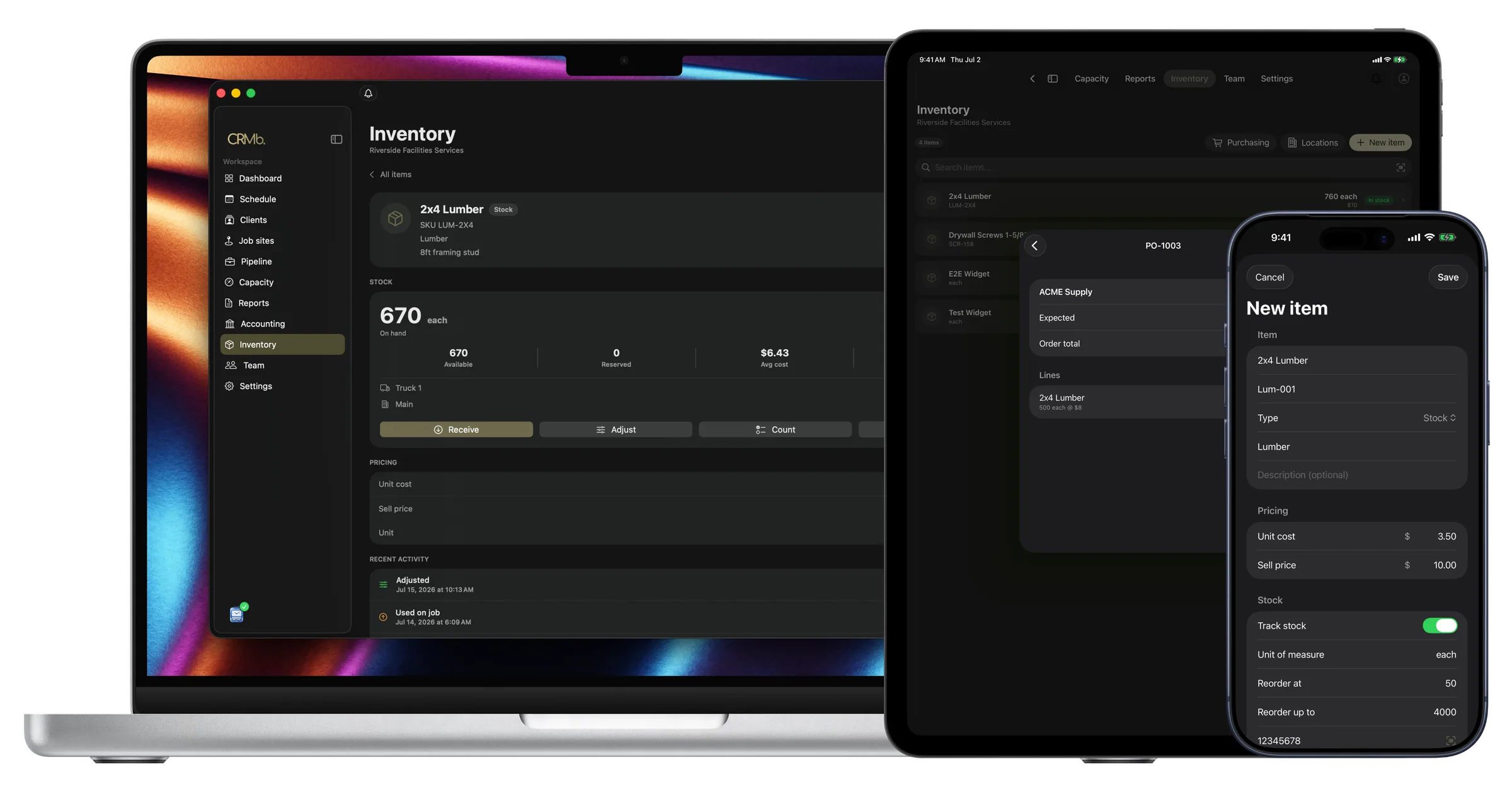
Every job shows its parts and its hours
Without CRMb, supply-house runs, truck restocks and a water heater bought for one customer get sorted out at month end.
CRMb keeps the count as you go. A valve taken off a truck comes off that truck's count, at the average of what you paid. The hours your crew works become the job's labor cost at each person's rate.
Payroll is built in: mark a week paid in Punch and CRMb matches the payout from your bank feed to the cent. CRMb does not close your year-end books. It reads your bank transactions, so a job's spending matches what left your account. It never moves money, and your bookkeeper gets one clean export each month.
Truck stock
The shop and each truck hold separate counts.
Load crimp rings onto a truck and both counts change.
- A reorder point warns you before a fitting runs out
- Anything used on a job leaves that truck at your average cost
- A job trailer counts the same way
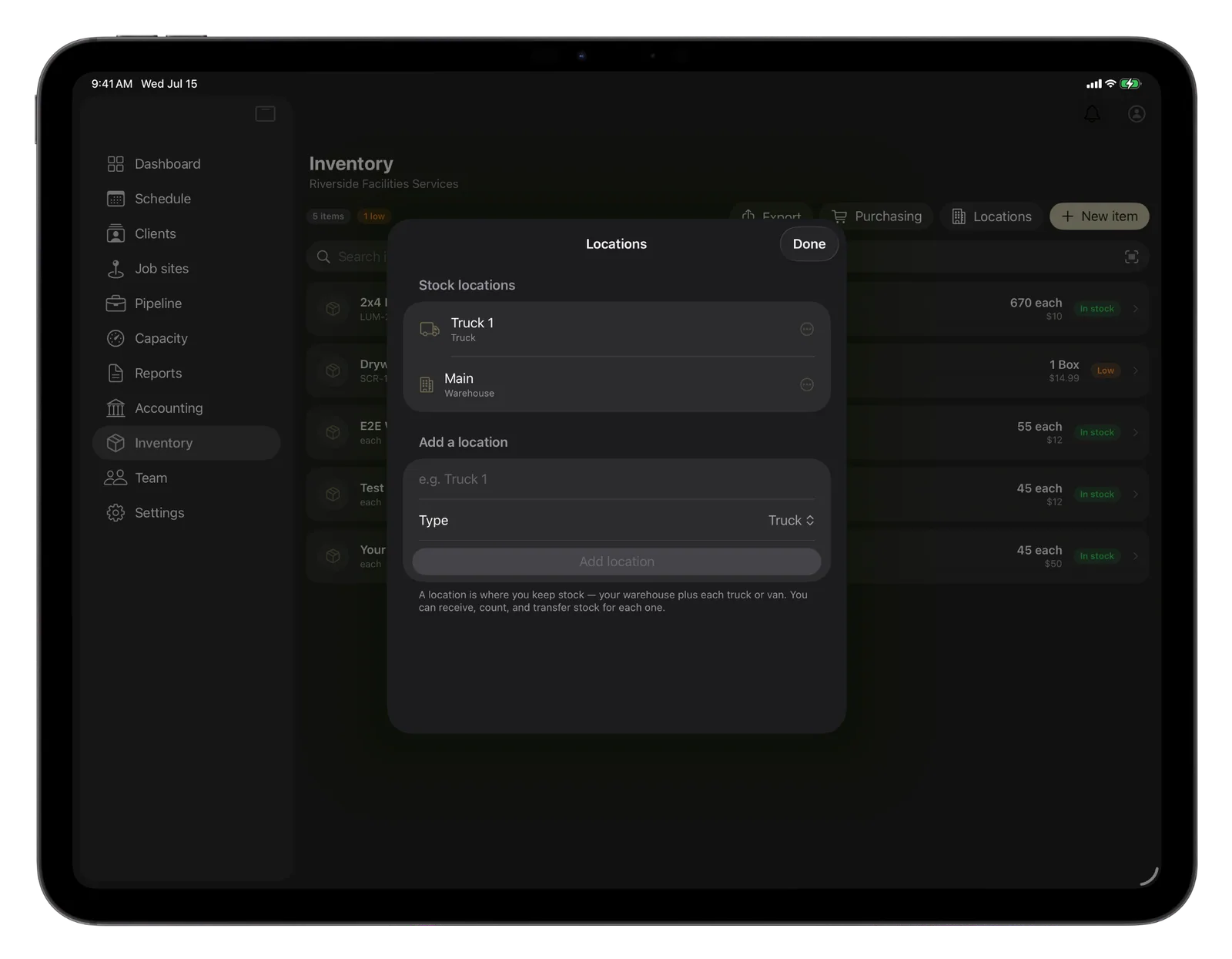
Purchase orders
Order the water heater for the job it goes into.
The order goes to your supplier, and what arrives is counted where you say.
- A quote can become the purchase order
- Received stock is counted in the location you name
- What you paid goes into the average the job is charged
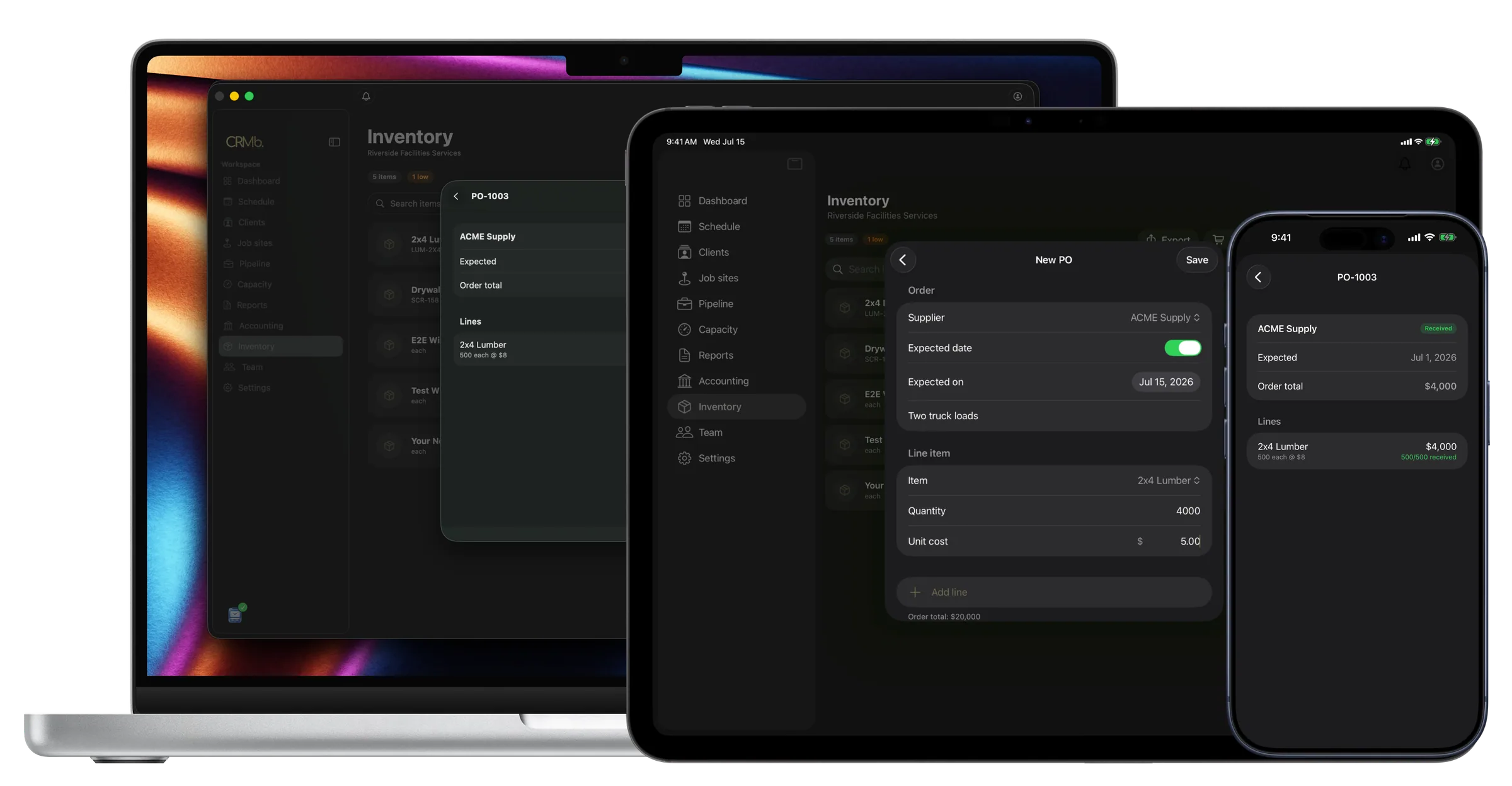
The invoice
An accepted quote turns into the invoice.
Your terms, the deposit and the pay link come with it.
- Worked hours are listed per person, at that person's rate
- Items logged on the job go on in one tap, at your selling price
- A flat-rate invoice still shows the item in the job's cost
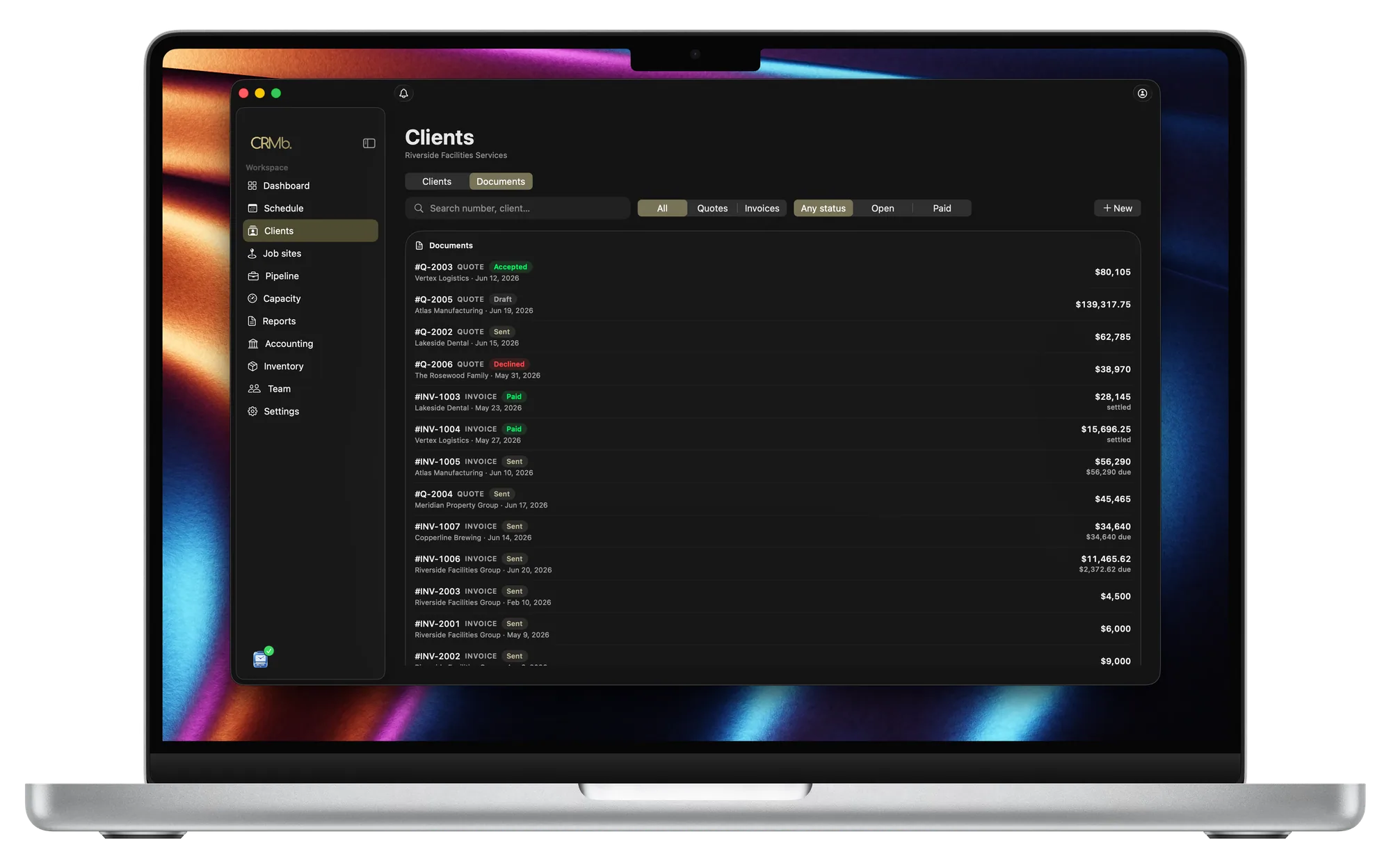
From the supply house to the paid invoice.
Know what your stock is worth
One report values the shop and every truck.
Reorder before a truck is out
Set a count to stay above and CRMb warns you.
Jobs are charged your average cost
Two prices for the same valve average out.
Send a purchase order to your supplier
You pick where the stock is counted when it arrives.
Labor cost is listed person by person
Each person's hours are priced at the rate you pay them.
Check a job's margin before you invoice it
Planned hours sit beside worked hours while the job is open.
The Punch connection
Punch puts the hours on the job for you.
Punch is the companion time app. A plumber punches in at the job site and lunch comes out. The remaining hours go onto the job at that person's rate, and the cost updates while the shift is open.
- No one has to type the hours in
- Both apps use the same job sites and the same crew
- A paid CRMb plan takes 25 percent off Punch bought on the web
Problems it puts to bed.
You do not know a repipe went over until you write the invoice.
You can check the margin on any day the job is open.
A plumber leaves a job to buy a fitting the truck should have carried.
A reorder point tells you what is low in time to order.
Crimp rings and small valves never make it onto the invoice.
Record the part on the job as you use it, then add it in one tap.
A water heater cost one price last month and another this month.
The job is charged the average of what you have paid.
Questions
The ones you are actually asking.
- How does a fitting off the truck end up on the invoice?
- The plumber records the part on the job. That truck's count goes down and the job takes your average cost. One tap puts it on the invoice at your selling price.
- Does CRMb dispatch calls or hold a flat-rate price book?
- No. CRMb has no dispatch board, no route planning and no flat-rate price book. It keeps no history for each fixture, and it does not track permits. Keep booking service calls where you book them now (ServiceTitan, Housecall Pro, Jobber).
- Can I schedule a standing visit for a property manager?
- Yes. Set how often the visit repeats and when it ends, and CRMb creates the whole series. Your customer gets one confirmation email about the first visit. CRMb does not bill them.
- What does CRMb cost?
- CRMb is $39 a month for your first user and $29 for each one after. Inventory and Purchasing cost another $20 a month. The first 14 days are free and no card is needed. See pricing.
- Do my plumbers have to use Punch?
- No. A manager can type in the hours a plumber worked, or mark a shift a no-show. Those hours go onto the job at that person's rate.
Stays where it is today: your dispatch board and route planning, flat-rate price books, service history for each fixture, permit tracking, year-end books.
See it on real punched hours.
14-day free trial. Your Punch data is already inside.