CRMb for gutter contractors
See what a house cost you before the crew packs up.
Each truck keeps its own count of coil, hangers and downspouts. Your crew's hours go onto the house at each person's rate. CRMb has no route planning, so book the day the way you do now.
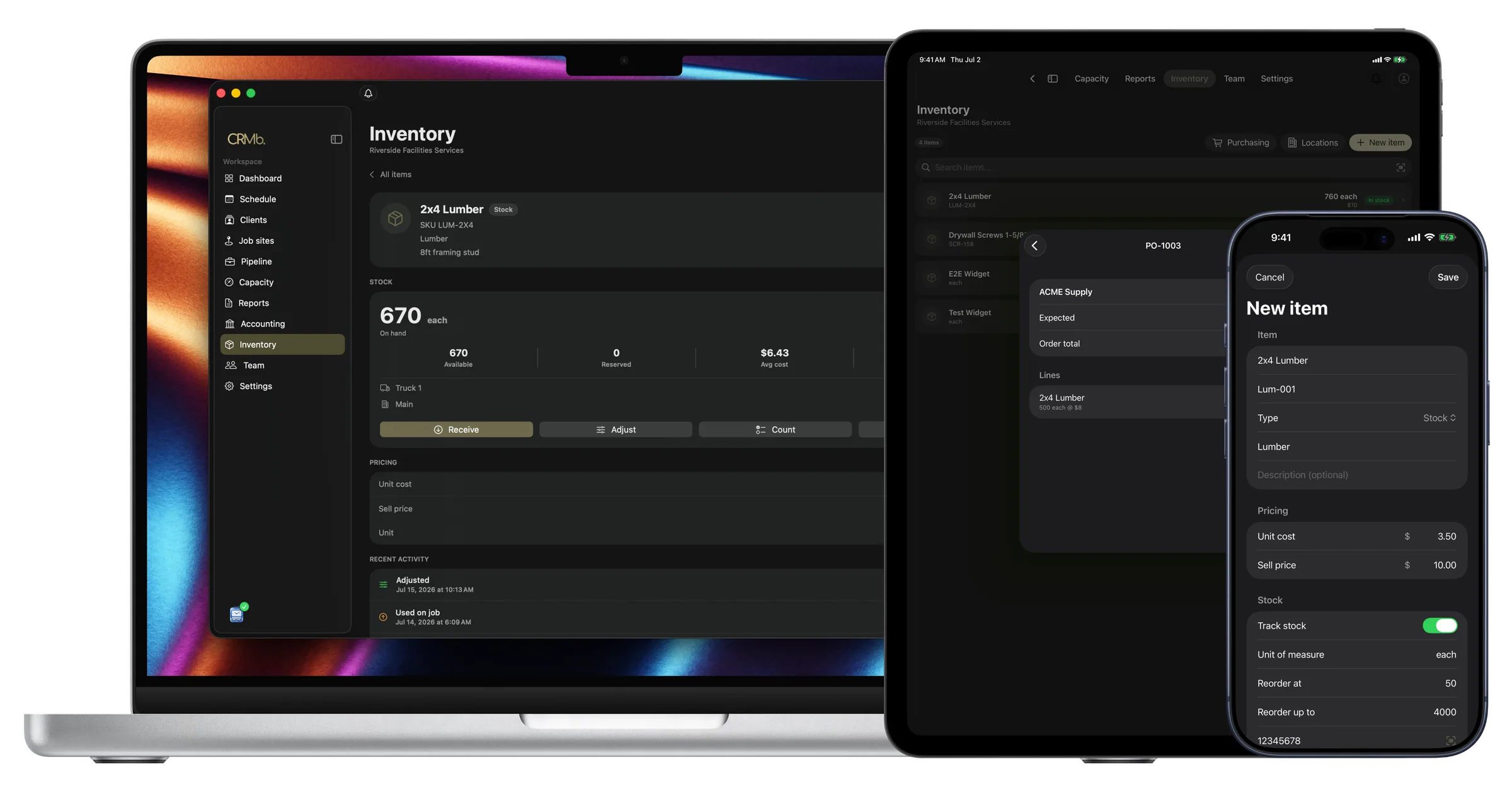
Every house shows what it used and what it cost
Without CRMb, the material and hours from three houses get added up at the end of the week.
CRMb records what each house used while the crew is still there. A downspout taken off the truck drops that truck's count, and the house is charged your average cost. Your crew's hours become the labor cost, each person at their own rate.
Payroll is built in: mark a week paid in Punch and CRMb matches the payout from your bank feed to the cent. Your year-end books are not CRMb's job. CRMb reads the transactions on your bank account, so a job's spending is what you really spent. Money never moves through CRMb, and your bookkeeper gets a clean export at month end.
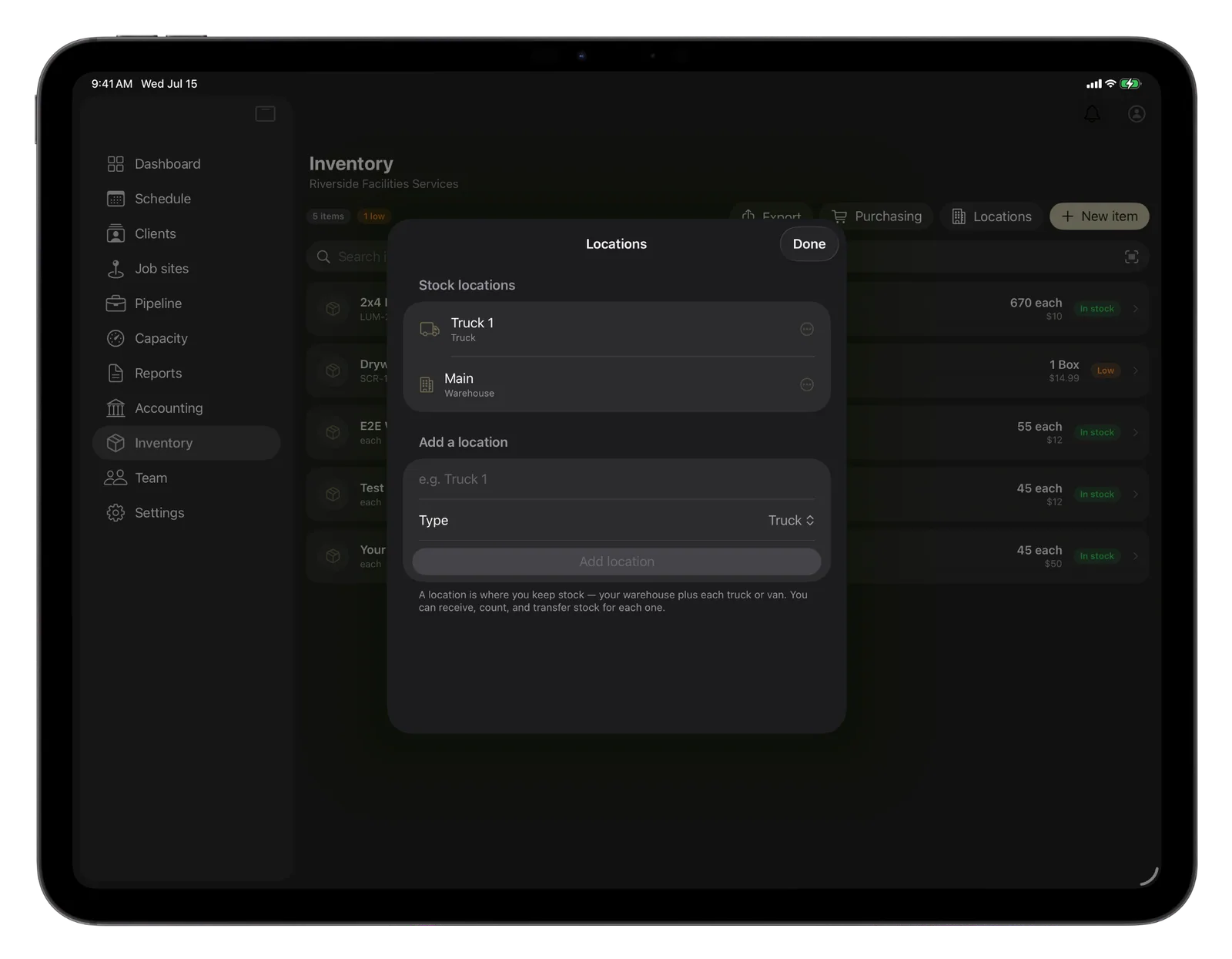
Truck stock
Every truck carries its own count.
Load coil onto a truck and both counts change.
- Coil by color, hangers, elbows and end caps each keep a count
- You get a warning before a color runs out
- Material used on a house is charged at your average cost
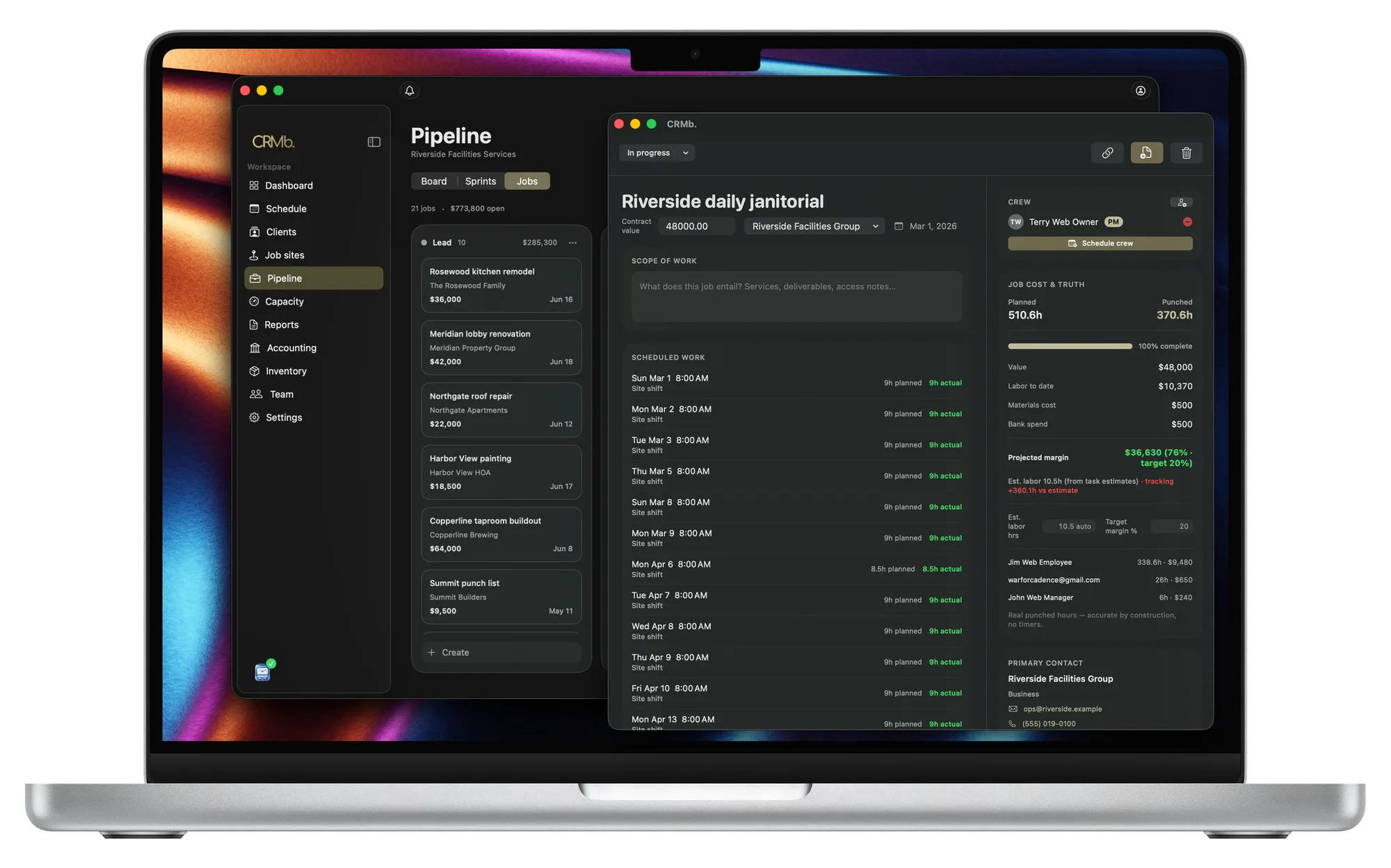
Job cost
The labor cost is there the same day.
A house running long shows it while the crew is still there.
- The hours you planned show next to the hours worked
- Labor cost and margin move as the day goes
- Labor cost is broken out person by person
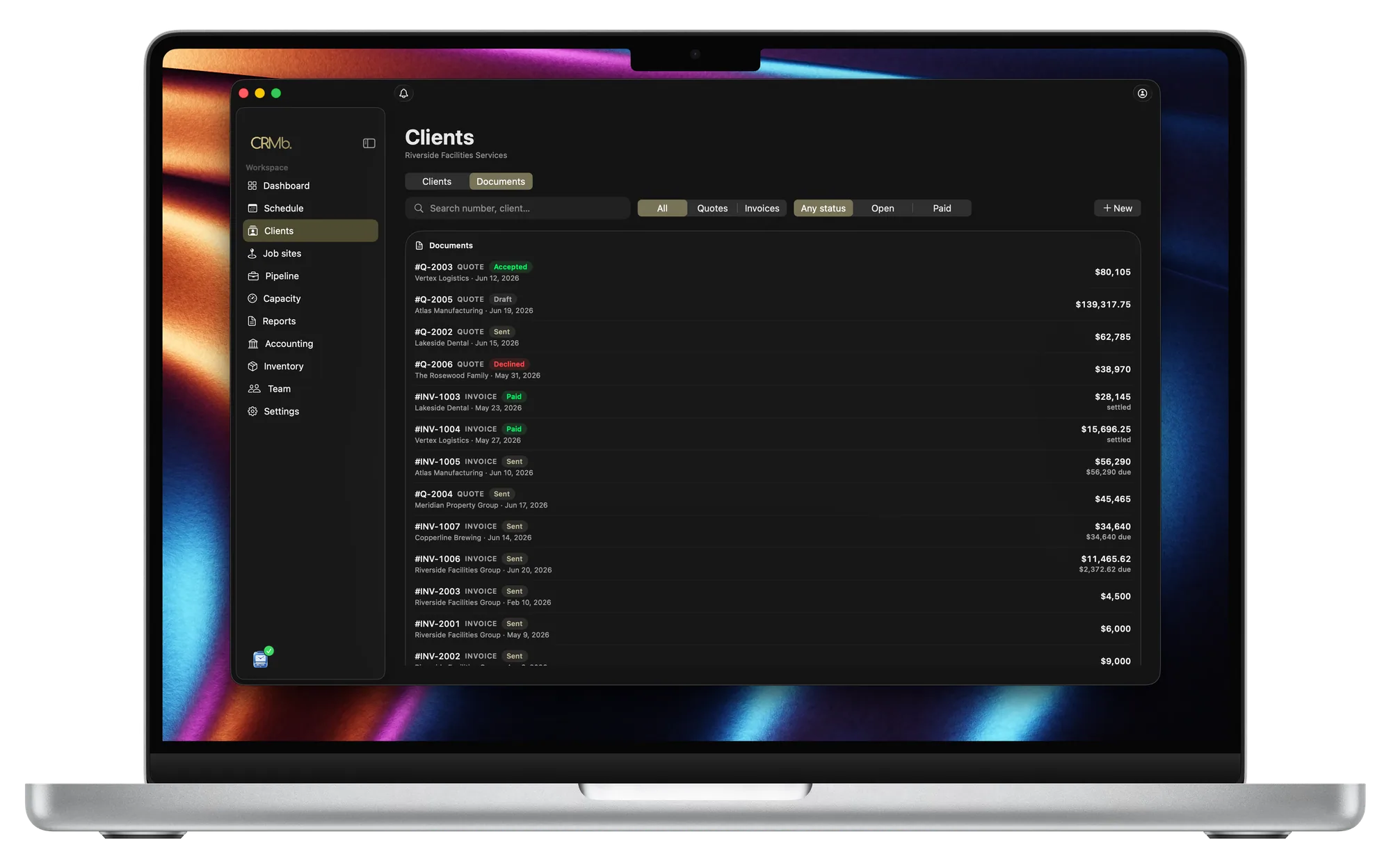
The invoice
The quote your customer accepted becomes the invoice.
The deposit, your terms and the pay link come with it.
- One tap puts the material on the invoice at your selling price
- Each person's hours appear as their own line
- A flat price still shows the material in the job's cost
From the coil on the truck to the invoice you send.
Count coil at the shop and on each truck
Loading a truck moves it off the shop's count.
Order a color before you run out of it
Pick the count you never want to go below.
A house is charged the average you paid
Two prices for the same roll average out.
Order from your supplier off the quote
You name the location, and the delivery is counted there.
Hours worked turn into labor cost
Each person is priced at the rate you pay.
The margin is there before you bill
It moves with every hour the crew works.
The Punch connection
Your crew punches in at the house.
Punch is the app your crew carries. Someone punches in at the house, and lunch comes out of the total. The rest goes onto the house at their rate. The cost updates while the shift is open.
- No one types the hours in later
- You set up job sites and crew once for both apps
- With a paid CRMb plan, a Punch plan on the web costs 25 percent less
Problems it puts to bed.
You learn a house lost money long after you finished it.
Cost and margin are ready the day the crew works.
The truck runs out of a color at the second house.
CRMb warns you a color is low before it is gone.
Elbows and end caps never make it onto the invoice.
Whoever takes them off the truck adds them to the house. One tap puts them on the invoice.
The last two rolls of coil came in at different prices.
The job uses the average of the orders you recorded.
Questions
The ones you are actually asking.
- How does a downspout on the truck end up on the invoice?
- Your installer records it on the house. CRMb takes it off that truck's count and charges the house your average cost. One tap adds it to the invoice at your selling price.
- Does CRMb route my crews or measure the house?
- No. There is no dispatch board, no route planning, and no service history for each house. CRMb does not close your year-end books. Payroll is built in: mark a week paid in Punch and CRMb matches the payout from your bank feed to the cent. Keep booking the day where you do now (Housecall Pro, Jobber). Aerial measuring stays in your estimating software.
- Can I schedule gutter cleaning that comes back every year?
- Yes. Say how often the visit repeats and when it ends, and CRMb creates the series. Your customer gets one confirmation email about the first visit. CRMb does not bill these visits for you.
- What will this cost me?
- $39 a month for your first CRMb user and $29 for each one after. Inventory and Purchasing add another $20 a month. The first 14 days are free and no card is needed. See pricing.
- Do I need Punch to get real hours?
- No. A manager logs the hours a person worked, or marks the shift a no-show. Those hours go onto the house at that person's rate.
Stays where it is today: a dispatch board, route planning for the day, aerial measuring and estimating software, a service history for each house, year-end books.
See it on real punched hours.
14-day free trial. Your Punch data is already inside.