CRMb for boatyards and marine technicians
Know what a repower costs while the boat is in the yard.
The parts room and each service truck keep their own count. Every technician's hours go onto the job at that person's rate. Your lift schedule stays where you keep it today.
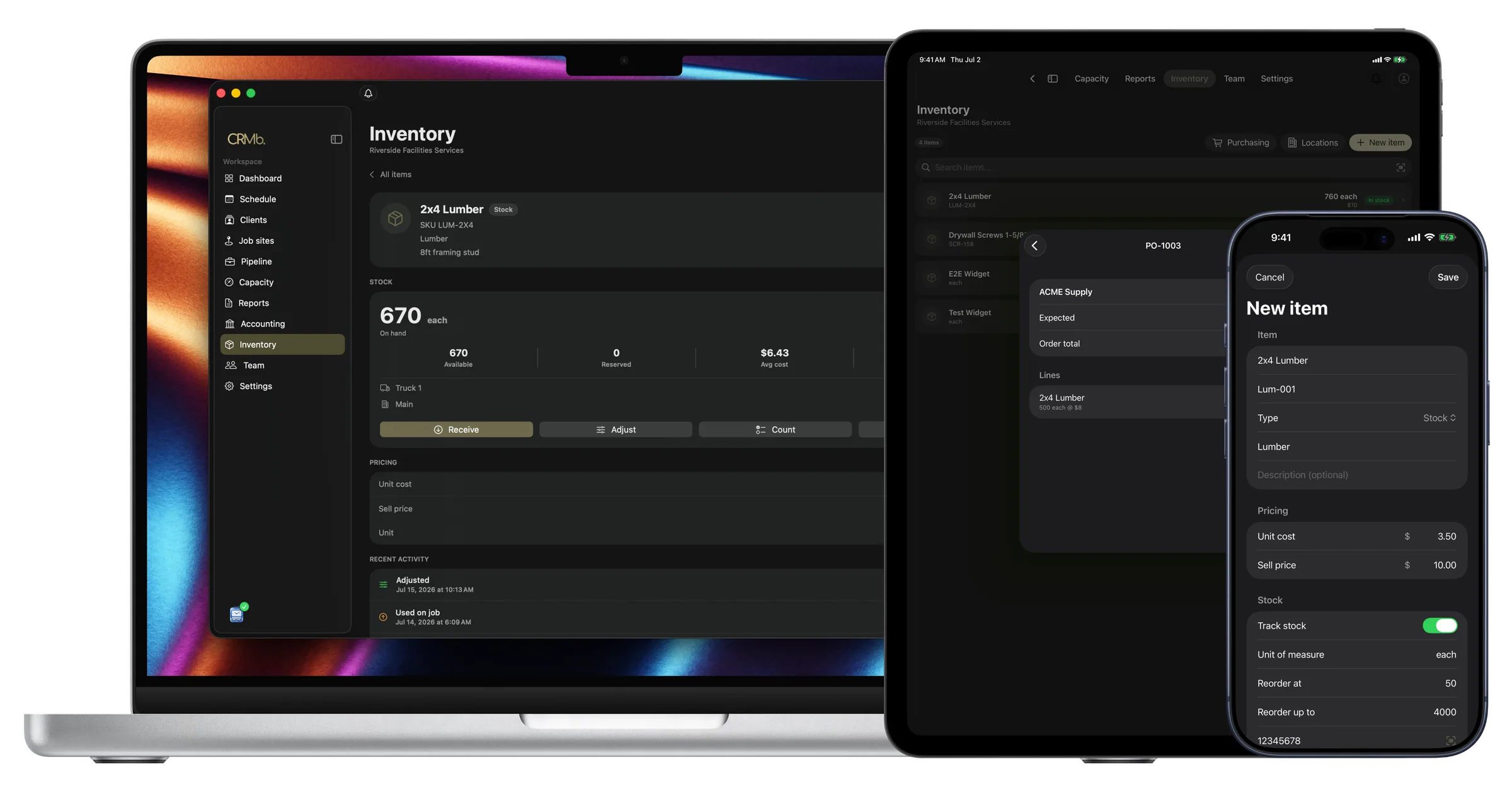
A refit's cost adds up while the work runs
A repower or a refit runs for weeks. The parts and the yard hours are usually totalled at the end.
CRMb keeps that total current. Take an impeller off a truck and that truck's count drops. The job is charged the average of what you paid. Worked hours go onto the job at each person's rate.
Payroll is built in: mark a week paid in Punch and CRMb matches the payout from your bank feed to the cent. CRMb does not close your year-end books. It reads your bank transactions, so job spending matches what you spent. It never moves money, and your bookkeeper gets a clean export each month.
Parts on hand
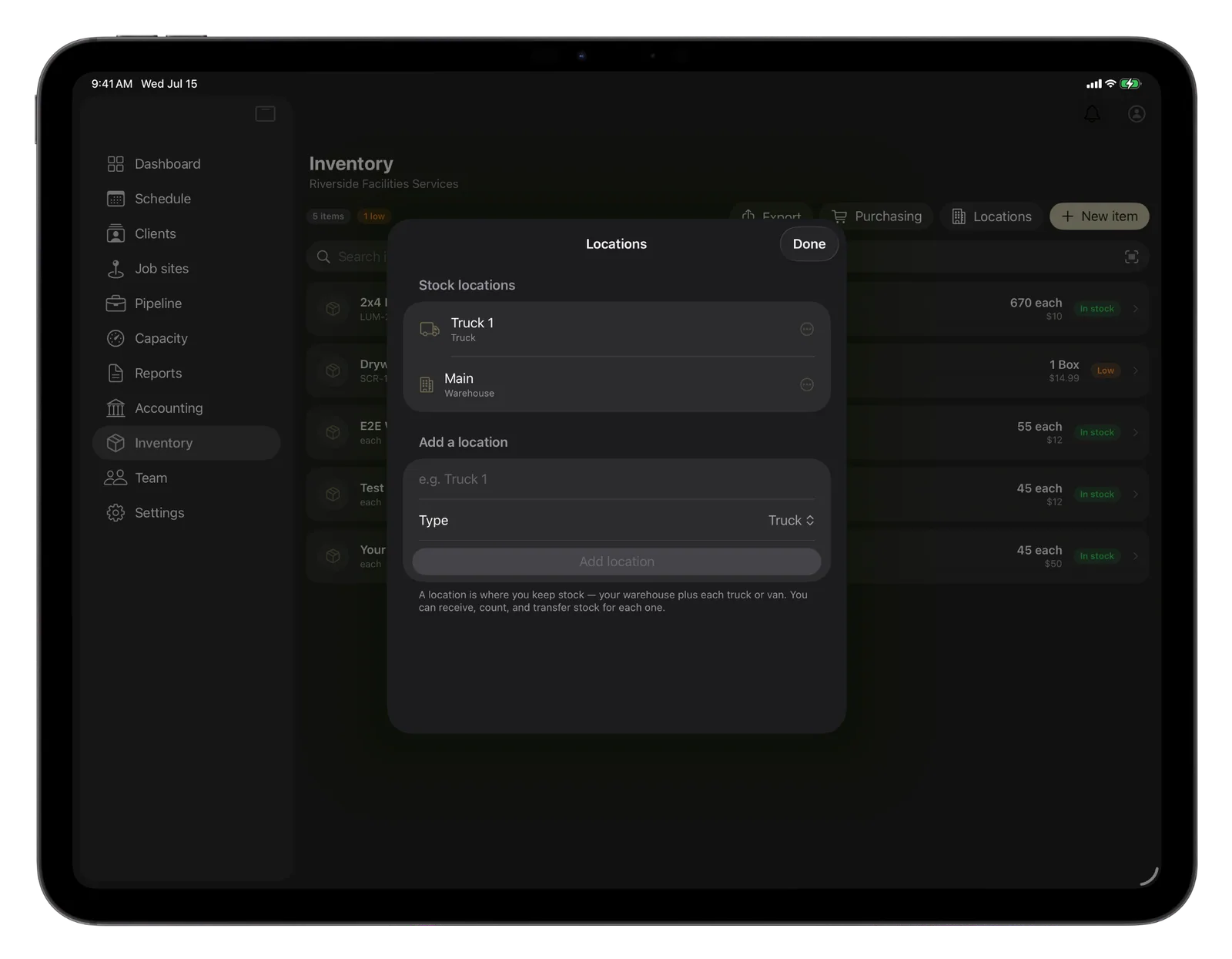
The parts room and each truck hold their own count.
Send filters out to a truck and both counts change.
- A reorder point warns you in time to order more
- Parts used on a job cost the average of what you paid
- A second yard is another location with its own count
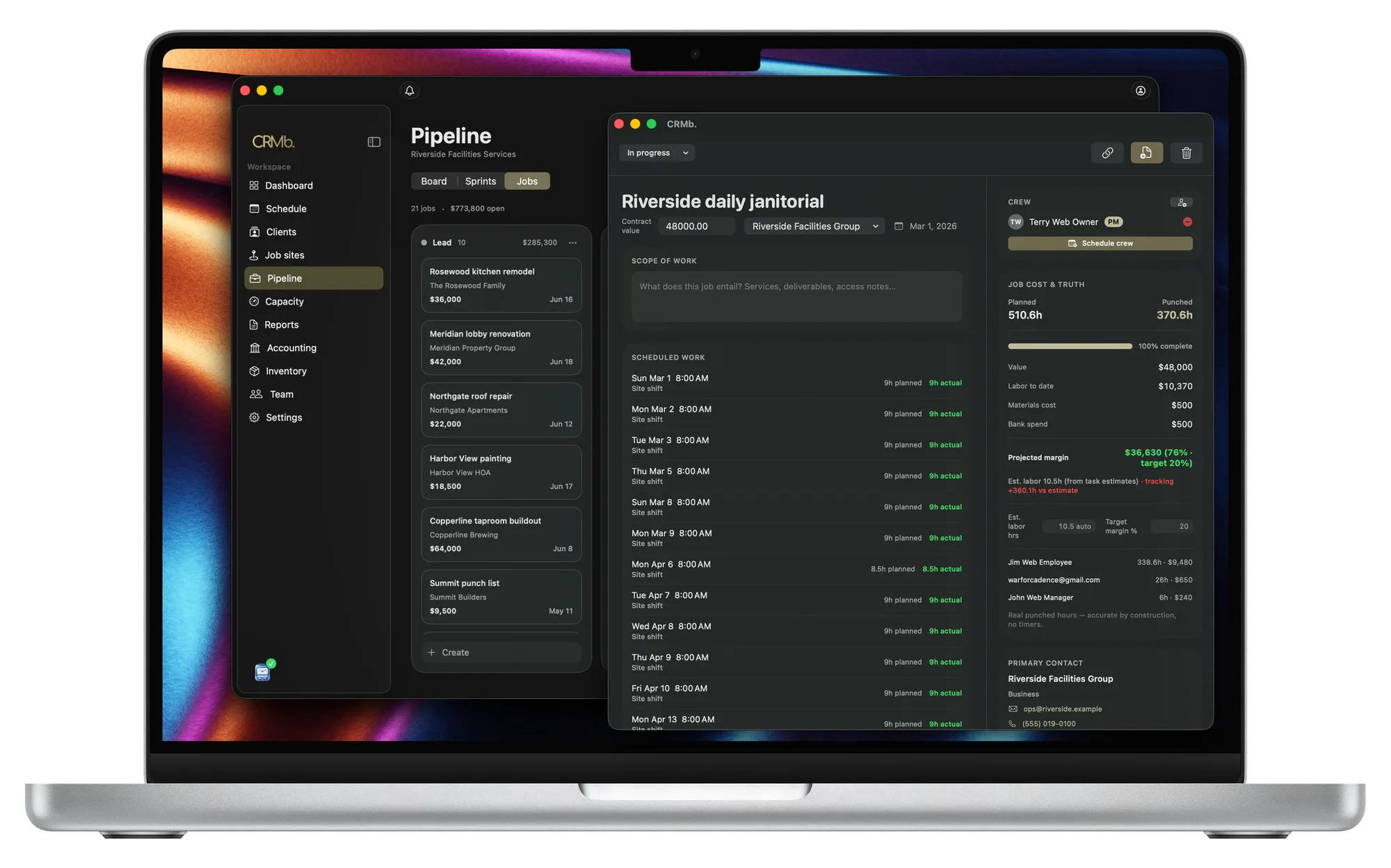
Job cost
See the labor cost on any day of a long job.
A job open for weeks shows its numbers the whole time.
- Planned hours sit beside the hours actually worked
- Labor cost and margin change while the job stays open
- Each technician's hours are costed at that person's rate
Quote to invoice
An accepted quote carries the deposit across.
Your terms, the deposit and the pay link come with it.
- Items logged on the job go on the invoice in one tap
- They are priced at what you sell them for
- A flat-rate price still shows the item in the job's cost
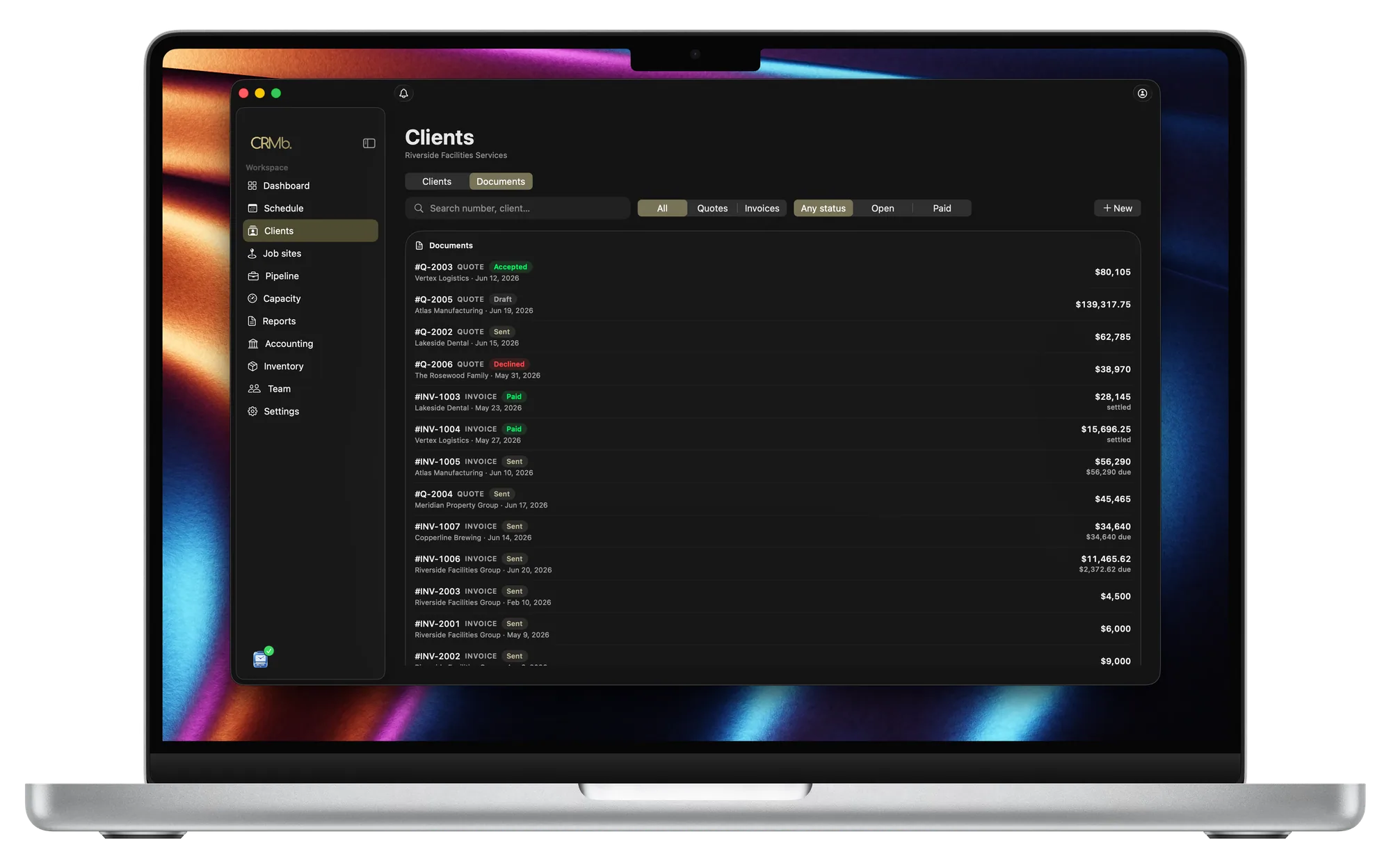
From the parts room to the invoice you send.
Know the stock you are holding
One report totals the parts room and every truck.
Order early when lead times are long
CRMb tells you when an item drops to the count you set.
A job pays your average cost
The same impeller bought at two prices averages out.
Send a purchase order to your distributor
What arrives is counted in the location you name.
Worked hours become the job's labor cost
Every person is costed at the rate you pay.
Check the margin before the boat launches
Every hour worked moves that number.
The Punch connection
Your technicians punch in where the boat is.
Punch is the companion time app. A technician punches in at the job site, and the yard is one. Lunch comes out, and the rest goes onto the job at that person's rate.
- Nobody types up the week's hours
- Both apps share the same job sites and crew
- Paying for CRMb takes 25 percent off a Punch plan bought on the web
Problems it puts to bed.
A repower's real cost shows up after the boat is in the water.
The cost and margin are there on any day of the job.
The part you need is two weeks out from the distributor.
A reorder point tells you to order while there is still time.
Parts used in the yard never reach the invoice.
The technician logs the item on the job, and one tap adds it.
The same part costs one price this season and another next.
Each order you record feeds the average cost charged to the job.
Questions
The ones you are actually asking.
- What happens when a part comes off a truck?
- The technician adds it to the job. That truck's count drops and the job takes your average cost. One tap puts the parts on the invoice at your selling price.
- Does CRMb track each boat or schedule the lift?
- No. CRMb keeps no service history by hull or engine serial number. It has no haul-out schedule, no slip or storage billing, no dispatch board and no route planning. Keep using DockMaster or your marina management system.
- Can I set up seasonal service that repeats?
- Yes. You say how often a visit repeats and when it ends, and CRMb creates the series. Your customer gets one confirmation email about the first visit. CRMb does not bill these visits.
- What will I pay?
- Your first CRMb user is $39 a month and every user after is $29. Inventory and Purchasing add $20 a month. The first 14 days are free and no card is needed. See pricing.
- Do my technicians have to use Punch?
- No. A manager enters the hours a person worked, or marks a shift a no-show. Those hours still go onto the job at that person's rate.
Stays where it is today: service history by hull or engine serial number, slip and storage billing, haul-out and lift scheduling, a dispatch board and route planning, year-end books.
See it on real punched hours.
14-day free trial. Your Punch data is already inside.